LEGISLATION AND REGULATION
WHAT IS TIP’S APPROACH TO DECISIONS MADE BY GOVERNMENTAL REPRESENTATIVES ?
Basically, we approach legislators, regulators, etc., in the same way we do other folks. That is, we try to combine reasonable information and evidence for concerns with logical conclusions – and positive suggestions for change for the better. Our general philosophy is that “science” is useful and informative – but not perfect – and often influenced by corporate bias, or just complexity of the situation. So, on this page you will see some of the information and ideas we have presented on a variety of TIP concerns, at the local, state & national level. Whether or not you live in Rhode Island, these issues almost certainly have relevance, and we hope the content will be helpful. Most recent material is at the top, with older legislation & info below. (More will be added as available) We welcome questions or requests for assistance with issues in your “neck of the woods”.. Contact us at: TIP@toxicsinfo.org. (NOTE: You can also learn much by entering a keyword in our website’s “Duck, Duck, Go” search engine on our Home Page, www.toxicsinfo.org, or the TIP TALKS Newsletter Page: http://toxicsinfo.org/tiptalks.htm).

SOME TESTIMONY & INFORMATION GENERATED AS OF SPRING, 2016
For a Hearing on Neonicotinoids by the RI Senate Environment & Agriculture Committee
Pesticide Concerns and A Positive Suggestion
Research Info On Neonicotinoids
For a Hearing on GMO Labeling by the RI Senate Committee on Health & Human Services
Liberty Goodwin Testimony On 2016 GMO Labeling
Additional Liberty Goodwin Comments On GMO Concerns
ACTIONS AT THE NATIONAL LEVEL
TELL THE FDA TO TEST FOR ROUNDUP IN OUR FOOD
http://action.foe.org/p/dia/action3/common/public/?action_KEY=19418
GOOD NEWS
BETHESDA MD COUNTY COUNCIL EDUCATION COMMITTEE RECOMMENDS AGAINST PLAN TO ADD ARTIFICIAL TURF FIELDS http://www.bethesdamagazine.com/Bethesda-Beat/Web-2016/County-Council-Committee-Recommends-Against-School-Systems-Plan-for-Adding-Artificial-Turf-Fields/
MAKING YOUR VOICE HEARD ON GMO LABELING IN RI
CHECK OUT THE LATEST ON
WHAT’S HAPPENING AT THE RI STATE HOUSE
Information About Speciific Bills/Topics
http://webserver.rilin.state.ri.us/Legislation
Committee Information & Hearings
http://status.rilin.state.ri.us/agendas.aspx
FOR ACTIONS ON FACEBOOK GO TO :
http://righttoknowri.org/
OR CONTACT
RightToKnowRI@gmail.com
(508) 677-5546
QUICK ACTION INSTRUCTIONS
** WHO IS YOUR REP?: If you don’t know, go to:
https://sos.ri.gov/vic/
(For privacy, you can go to General Voter Information,
with just your street address &
no personal information)
**DO ANY OR ALL OF THE FOLLOWING:
1. ATTEND THE HEARING IN PERSON IF YOU CAN GET THERE.
YOU CAN GET UPDATED BILL & HEARING INFO AT:
www.rilin.state.ri.us/QuickCalendar
2. CALL OR E-MAIL YOUR REPRESENTATIVE WITH YOUR VIEWS.
(If they are not on the committee, ask them to pass the word to someone who is.)
To find all RI House Members Phones & E-Mails
http://webserver.rilin.state.ri.us/Email/RepEmailListDistrict.asp
3. CALL OR E-MAIL MEMBERS OF THE HOUSE HEW COMMITTEE DIRECTLY. SEE MEMBERS LIST BELOW.
( Bill Sponsor & Co-Sponsors On The Committee Are Highlighted. Thank Them!)
4. E-MAIL YOUR TESTIMONY TO THE COMMITTEE (KEEP IT SHORT - ONE TO TWO PAGES MAXIMUM):
E-Mail to Secretary: lcaltaldi@rilin.state.ri.us
5. YOU DON’T NEED TO BE AN EXPERT! PICK ONE OR MORE TALKING POINTS FROM
TIP’S INFO FLYER OR ARTICLE (BELOW), OR JUST SAY,
“Please Support My Right To Know What I’m Eating,
As 64 Other Countries Do.”
IF YOU WOULD LIKE HELP WITH THIS, OR FOR THE LATEST ON WHAT’S HAPPENING,
CONTACT” LIBERTY GOODWIN, TIP DIRECTOR: 401-351-9193 OR
liberty@toxicsinfo.org
FOR ACTIVITIES ON FACEBOOK , CONTACT WENDY FACHON AT wendy@netwalkri.com OR GO TO
http://www.facebook.com/RighttoKnowRI
2015 RI HOUSE HEW COMMITTEE, SECRETARY: LISA CATALDI, PHONE: 222-2296
Legislator |
Appointment |
E-mail |
Representative Marvin L. Abney, Newport & Middletown, District 73 |
(401) 487-1380 |
rep-abney@rilin.state.ri.us |
Representative Mia A. Ackerman Cumberland & Lincoln, District 45 |
(401) 658-0981 |
rep-ackerman@rilin.state.ri.us |
Representative Gregg Amore East Providence, District 65 |
(401) 339-9378 |
rep-amore@rilin.state.ri.us |
Representative Samuel A. Azzinaro, District 37 in Westerly
|
Vice Chairperson, (401) 596-1434
|
rep-azzinaro@rilin.state.ri.us |
Representative David A. Bennett, Warwick, District 20
|
(401) 648-1171 |
rep-bennett@rilin.state.ri.us |
Representative Dennis M. Canario District 71, Portsmouth, Little Compton & Tiverton |
(401) 683-4926 r |
rep-canario@rilin.state.ri.us |
Representative Arthur J. Corvese, North Providence, District 55 |
(401) 353-8695 |
rep-corvese@rilin.state.ri.us |
Representative Grace Diaz, Providence, District 11 |
Deputy Chairperson (401) 467-8413
|
rep-diaz@rilin.state.ri.us |
Representative Kathleen A. Fogarty, District 35, South Kingstown |
(401) 222-2466r |
rep-fogarty@rilin.state.ri.us |
Representative Arthur Handy, District 18 (Cranston= |
(401) 785-8996 |
rep-handy@rilin.state.ri.us |
Representative Robert B. Lancia, District 16, Cranston |
(401) 222-2259 |
rep-lancia@rilin.state.ri.us |
Representative Shelby Maldonado, District 56, Central Falls |
(401) 222-2466 |
rep-maldonado@rilin.state.ri.us |
Representative James N. McLaughlin, Cumberland & Central Falls, District 57
|
(401) 333-4946 |
rep-mclaughlin@rilin.state.ri.us |
Representative Joseph M. McNamara, Warwick & Cranston, District 19
|
Chairperson(401) 941-8319 , |
rep-mcnamara@rilin.state.ri.us |
Representative Michael Morin, District 49, Woonsocket |
401-265-0910 |
rep-morin@rilin.state.ri.us |
Representative Justin Price, District 39, Hopkinton, Exeter and Richmond. |
(401) 222-2259 |
rep-price@rilin.state.ri.us |
Representative J. Aaron Regunberg, District 4, Providence, (East Side) |
(401) 222-2466 |
rep-regunberg@rilin.state.ri.us |
|
|
|
OTHER INFORMATION ABOUT GMOS & WAYS TO SUPPORT GMO LABELING – IN RHODE ISLAND OR ELSEWHERE
GMO LABELING - WHAT’S THE SCOOP?
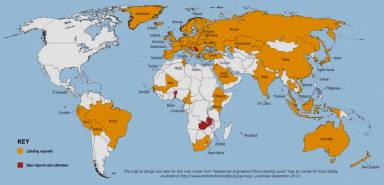 64 COUNTRIES ROUND THE WORLD LABEL GE FOOD WHY? WHY NOT THE U.S.? WHY NOT RI?
http://gmoinside.org/64-countries-around-the-world-label-ge-food/
A QUICK GUIDE TO THE QUESTIONS & CONCERNS
AND WHAT’S HAPPENING NOW IN LITTLE RHODY
**VIEW/DOWNLOAD OUR
GMO LABELING INFORMATION FLYER . SHARE IT WITH FRIENDS, BY LINK OR E-MAIL
 **SUPPORT ACTIVITIES: We are providing NO-GMO tables at several events – let us know of any you think should have one. Also, a couple of Non-GMO Dinners are planned. Contact us for details.
**DOWNLOAD, PRINT & DISTRIBUTE OUR RI GMO PROJECT SIGN, AS A HANDOUT OR POSTER
*********************************************
BASICS OF GMOS
 What are GMOs? GMOs are "genetically modified organisms," plants or animals engineered
with DNA from bacteria, viruses or other plants and animals. These experimental genes from different
species can not occur in nature or in traditional crossbreeding. While the large corporations that
produce GMOs claim they are a better solution to feeding a hungry planet, there is a growing body of
evidence connects GMOs with health problems, environmental damage, and violation of farmers' and
consumers' rights.
What are GMOs? GMOs are "genetically modified organisms," plants or animals engineered
with DNA from bacteria, viruses or other plants and animals. These experimental genes from different
species can not occur in nature or in traditional crossbreeding. While the large corporations that
produce GMOs claim they are a better solution to feeding a hungry planet, there is a growing body of
evidence connects GMOs with health problems, environmental damage, and violation of farmers' and
consumers' rights.
Which foods are GMO? Roughly 70% of food sold contain GMO ingredients.
Because of the prevalence of soy and corn in processed foods, about 30,000 genetically modified
food products sit on US grocery store shelves. You will see high fructose corn syrup,
corn oil, or corn starch on thousands of ingredient labels.
Major brand name sodas are loaded with high fructose corn syrup made from GMO corn.
Other GMO commodity crops include cottonseed, canola, milk, and sugar beets
(for sugar). The artificial sweetener aspartame is also a GMO product.
More and more consumers are demanding mandatory labeling of GMO
products and their "right to know..."
Because GMO foods are untested. The U.S. Food and Drug Administration (FDA)
promotes biotechnology instead of food safety. The FDA has neglected to require safety studies and
does not mandate labeling of GMO products. The agency official in charge of the FDA comes from
Monsanto, the corporate giant that specilizes in bioenginnering consumer products and
chemical pesticides and herbicides. This is a major conflict of financial interest.
Because GMO crops harm the environment. Neonicotoid-based
pesticides designed to treat genetically-modifications crops were banned in
Europe in April 2013, because they are threatening the population of pollinator
bees to extinction. The U.S. bee population has been declining by 30% annually over the past 5 years. Bird species and food fish are dying due to pesticide pollution.
Because GMOs are unhealthy. Animals studies have shown that consumption of GMO foods result in organ damage, immune disorders, premature aging, and infertility. Human illnesses and health care costs have been rising at alarming rates since the introduction of GMO foods into the marketplace in 1996.
***************************************************************************************************************
OLDER LEGISLATION
BILLS OF INTEREST BEFORE THE U.S. CONGRESS
LANDMARK CHEMICAL LEGISLATION INTRODUCED TO
PROTECT THE HEALTH OF AMERICAN FAMILIES
www.saferchemicals.org/safe-chemicals-act/index.html
(Info from the Safer Chemicals Healthy Families Coalition)
Legislation to revamp the 34-year-old Toxic Substances Control Act (TSCA) has been introduced in the U.S. Senate and House of Representatives. Senator Frank Lautenberg (D-NJ) sponsored S. 3209, the Safe Chemicals Act of 2010, and Representatives Bobby Rush (D-IL) and Henry Waxman (D-CA) have unveiled H.R. 5820, the Toxic Chemicals Safety Act of 2010.
This is not the first time Congress has attempted to fix our nation’s flawed system for regulating toxic chemicals, but it is the first time that both chemical industry lobbyists and public health advocates agree that we can’t delay change any longer — the scientific evidence is too overwhelming; the public outcry too loud.
House Panel Tackles Chemical Legislation (July 29)
The need for reform is urgent. As Representative Rush said, "While the federal government’s ability to effectively monitor, test or otherwise oversee assorted industries will be strengthened through our legislation, right now our nation is bearing the brunt of decades of lax to non-existent federal oversight and the harm to consumers is immeasurable."
Read the House Bill (H.R.5820) on THOMAS
Read the Senate Bill (S.3209) on THOMAS
The Safer Chemicals, Healthy Families coalition supports the goals of both bills. However, we plan to work closely with Congress to fine-tune the legislation to make sure it reflects the concerns of the health care providers, scientists, advocates for the learning and developmentally disabled, and all the millions of individuals we represent.
"There has never been more momentum to reform our federal chemical policy," said Andy Igrejas, Director of the Safer Chemicals, Healthy Families coalition.
Read our July 22nd press release on the House Bill
ASK CONGRESS TO GET BEHIND THE SAFE COSMETICS ACT OF 2010
http://org2.democracyinaction.org/o/5500/p/dia/action/public/?action_KEY=3621
CONTACTS: For Activists: Mia Davis, National Grassroots Coordinator , Clean Water Action, 617-338-8131, x201
For Legislative Offices: Janet Nudelman, Director of Program and Policy, Breast Cancer Fund, 415-346-8223 x24
(Info from Democracy in Action)
What are all those chemicals in your lipstick? your aftershave? your child's shampoo? Some of them are linked to cancer, birth defects, infertility and other health problems. But right now we have an unprecedented opportunity to clean up our cosmetics - and we need your help!
The Safe Cosmetics Act of 2010, introduced by U.S. Rep. Jan Schakowsky with Rep. Edward Markey and Rep. Tammy Baldwin, is a huge moment for consumers, parents and environmental health advocates: for the first time in 70 years, we have a real chance to pass national legislation that would eliminate harmful chemicals from the products women, men and children put on their bodies every day. Now Congress needs to hear from us. Please tell your elected officials this common-sense legislation is important to you!
SAVE "GEN-M," GENERATION MONSANTO!
Tell Congress To Label Genetically Modified Foods!
Organic Consumers Association (OCA) Activist or Media Inquiries: 218-226-4164
http://organicconsumers.org, http://organicconsumers.org/monlink.cfm
(Info from the Organic Consumers Association)
Gen-M, "Generation Monsanto," the first generation of humans force-fed genetically modified foods, hasn't reached reproductive age yet (they were born in the late 1990s). But, if a critical mass of animal feeding studies are any indication, the millennial generation, reared on Food Inc.'s unlabeled "Frankenfoods" can look forward to a long-term epidemic of cancer, food allergies, sterility, learning disabilities, and birth defects.
Corn (85% of U.S. production is GM), soy (91% GM), cotton (88% GM), canola (85% GM) and sugar beets (95% GM) are all genetically engineered by Monsanto to withstand massive doses of the company's glyphosate herbicide RoundUp, or else to exude their own pesticide, Bacillus Thuriengensis (Bt). RoundUp, the favorite weedkiller poison of non-organic farmers and gardeners, causes brain, intestinal and heart defects in fetuses. And scientists warn that RoundUp, the most extensively used herbicide in the history of agriculture, "may have dire consequences for agriculture such as rendering soils infertile, crops non-productive, and plants less nutritious." In addition, hundreds of thousands of US dairy cows are injected with genetically engineered Bovine Growth Hormone (developed by Monsanto) in spite of studies linking rBGH with cancer, and longstanding bans on the drug in the EU, Japan, Canada, and most industrialized nations.
With Monsanto's genetically modified crops and chemicals threatening public health and the environment, not to mention the next generation's reproductive capacity, why isn't there a massive consumer outcry to restrain Monsanto's biotech bullying and ban genetically engineered foods and agriculture?
The answer is disturbingly simple. Collusion between Monsanto and elected public officials (including the current Obama Administration) has obscured the fact that almost all non-organic foods in the US contain genetically modified ingredients. Despite poll after poll indicating that 87-95% of US consumers want mandatory labels on foods containing genetically modified ingredients, Congress has heretofore listened to Monsanto and corporate agribusiness, rather than their own constituents. In the European Union, Japan, or South Korea, where genetically modified foods must be labeled, there are no genetically modified foods on grocery story shelves (and little or none served in restaurants), since most consumers would not buy them and a significant number would complain if they saw GMO labels on products. Consequently there are very few genetically modified crops being cultivated in the EU (mainly a small amount of corn in Spain for animal feed).
Most Americans simply do not understand that 80% of non-organic supermarket processed foods (basically every product containing soy, corn, canola, cottonseed oil, sugar beet derivatives or ingredients from animals fed soy or corn) are contaminated with genetically modified organisms. While nearly everyone in North America has eaten genetically modified foods, only 26% believe that they have.
People don't think they're eating genetically modified foods because they have no way of knowing whether they are or not. Genetically modified foods aren't labeled. If we're going to save this generation from reproductive dysfunction and save our farmland from the ravages of RoundUp, we need to stop Monsanto. The first step is to protect consumers' right to know whether their food is genetically modified. We need genetically modified food labeled now!
****************************************************************************************************
2010 RI LEGISLATIVE UPDATE
H7949 GREEN CLEANING FOR SCHOOLS
 UNFORTUNATELY H7949 DID NOT MAKE IT THIS YEAR. IT WAS A GOOD BILL TO REQUIRE ALL SCHOOLS IN RHODE ISLAND TO USE CLEANING PRODUCTS THAT ARE ENVIRONMENTALLY AND HEALTH-FRIENDLY - AND CERTIFIED AS SUCH BY INDEPENDENT THIRD PARTIES. THE BILL WAS SUBMITTED BY REP. PETER PALUMBO, AND CO-SPONSORED BY REPS. MC NAMARA, MALIK, JACKSON, & SLATER. A HEARING WAS HELD WEDNESDAY, APRIL 7, BEFORE THE HOUSE HEW (HEALTH, EDUCATION & WELFARE) COMMITTEE.
EWG Cleaning Supplies
GCS Resources and Other States' Practices
The 2009 Good Green Schools Guide is here to view online
or to download the Guide: www.toxicsinfo.org/healthyschools/GGSG.doc for printing (Includes cover sheet).
CONTACT RI HOUSE HEW COMMITTEE MEMBERS AND ENLIST YOUR STATE REPRESENTATIVE TO SUPPORT THIS BILL! Click on the bill number, H7949, to see the full text, at:
www.rilin.state.ri.us/CommitteeMeetings/hhewmet.htm
HEW Committee membership information and E-Mails are at:
www.rilin.state.ri.us/ComMembers/ComMemr.asp?ComChoiceR=HHEW
and are inserted below, for your convenience. If you want to phone, you can look up individual legislator numbers at: www.rilin.state.ri.us/Email/RepEmailListDistrict.asp
************************************************************* **********************************************
DO NOT SUPPORT: House Bill No.7931 BY Silva, Edwards , ENTITLED, AN ACT RELATING TO EDUCATION -- HEALTH AND SAFETY OF PUPILS The Silva bill does not include a requirement for third party certification, and relies on the overburdened state agencies to research products make decisions in combination with industry representatives. Delay and/or greenwashing are likely if it is passed.
************************************************************************ **************************
2009 Archives
In 2009, we were watching two bills - H5358, to require green cleaning in all RI schools, and H5038, to ban endocrine-disrupting phthalates & bisphenol-A in children’s products and toys used by kids under age six.
The BP-A bill, unfortunately, did not go forward. And we ourselves withdrew our support from H5358 when we were unable to get it amended to include a requirement for use of third party certified cleaning products.
H5358, the Green Cleaning bill
TIP Testimony on H5358, Green Cleaning
Possble Changes in H5358
H5038, a Bill Banning Phthalates and Bisphenol-A
TIP Testimony on H5038, Banning Phthalates and Bisphenol-A
Health, Education and Welfare Committee Contact Information
*************************************************************************
NOTE: Though the RI Children’s Product Safety Act: did not succeed last year, federal legislation was passed to strengthen regulations & oversight of a variety of products by the consumer product safety commission. However, it only mentions phthalates by name, not bisphenol-A. Also, federal agencies have a track record of sometimes taking many years to even begin work on mandated actions. And the research on which they rely is often tainted by industry involvement. Our testimony gives details on these concerns. (Insert testimony files)
ALSO REMEMBER - THE BEST PROTECTION FOR OUR KIDS IS EDUCATED CONSUMERS! SEE OUR KIDS & TOXICS SECTION FOR INFORMATION ON DANGERS, HEALTHIER ALTERNATIVES, AND ACTIONS FOR HEALTHIER SCHOOLS. www.toxicsinfo.org/TIPS_kids.htm
************************************************************************
FOLLOW-UPS ON EARLIER RHODE ISLAND LEGISLATION
SCHOOL LAWN PESTICIDE LEGISLATION
Our legislation to remove lawn pesticides from the grounds of schools and day care centers came very close to approval in the RI Senate Environment & Agriculture Committee during the 2007 session. However, in the end, the committee voted to ask for information gathering and discussion by DEM, DOH, RIDE and the School Committees, to result in a report to the legislature in November. The report was submitted, and RI DEM is following up on this.
**CONTINUE SUPPORT FOR RI SCHOOL & DAY CARE LAWN PESTICIDE BAN -- IN A NEW WAY The RI Dept. of Environmental Management is trying to educate schools to adopt safer practices by preparing and following Integrated Pest Management (IPM) plans for mostly organic land care. Ask your local school about their pesticide policies and practices. Encourage them to learn and utilize safer ways to maintain playing fields. For useful articles you can share, see the Pesticide-Free Playing Fields section of our website: www.toxicsinfo.org/playingfields.htm . And, here’s another resource to use:
PESTICIDE-FREE PLAYING FIELDS DVD
( An excellent resource for educating those responsible for care of school and athletic fields).
Your children and others run, play and roll around on fields provided by their schools and sports associations. Make sure they are not exposed to toxins there that can trigger asthma attacks or contribute to learning disabilities, endocrine disruption and/or childhood cancer. A fine, 7 1/2 minute DVD from the Connecticut Dept. of Environmental Protection shows how schools can transition to healthier practices.
**SHOW THE CT ORGANIC LAND CARE VIDEO TO GROUPS OR DECISIONMAKERS! Contact TIP to borrow a DVD or VHS copy, and more information on how you can help.
************************************************************************
RI SCHOOL PESTICIDE BILL INFORMATION
View the Final Amended 2007 Replacement Bill
View the Previous 2007 Amended Version of S560 Sub A
Environment and Agriculture Committee Member Contact Information
View Testimony as Adapted for the 2007 Bill
View Testimony from 2005
************************************************************************
RI INDOOR ENVIRONMENTAL QUALITY BILL
A 2006 Resolution from the Rhode Island State Legislature
A bill calling for minimum standards for Indoor Environmental Quality was drafted by GCD in cooperation with TIP, and introduced in both the RI State Senate & House in 2006. A hearing was held on March 8, before the Senate Health & Human Services Committee, another March 28, before the House Environment & Natural Resources Committee & on April 10, before House Health & Human Services. On May 23, 2006, the RI State Senate passed a Resolution Urging the Department of Administration to Use Environmentally-Safe & Health-Friendly Cleaning Products in State Facilities & Workplaces, based on the proposed bill, S2627.
2008 Update: A bill requiring environmentally friendly cleaning products in all schools was introduced in 2007 and 2008, but was not acted upon. We expect to continue efforts to obtain stronger legislation and/or an Executive Order from the Governor, addressing this concern. Meanwhile, the RI Dept. of Health has taken steps to encourage and educate schools in green cleaning practices and materials.
**SPEAK TO THOSE RESPONSIBLE FOR SCHOOL MAINTENANCE IN YOUR TOWN ABOUT SWITCHING TO ENVIRONMENTALLY FRIENDLY CLEANING PRODUCTS! Tell them that this change is usually cost-neutral or may actually save money. Free assistance is available to help them do it.
Articles
States Sue EPA for Files on Household Pollutants
Virginia Volatile Organic Compound Regulations
Fact Sheet - Massachusetts Legislation on Safer Cleaning Products
NJ, MA, NY Green Cleaning Actions, 3/2006
NJ Green Cleaning Executive Order
2004 Vermont Governor's Proclamation